Explore Religious Heritage Across Europe

Here you can search for a building to visit. You can use the map find destinations, or you can use the filters to search for a building based upon what different criteria.

Refine search

Mauritiuskerk

IJlst, NL

Before the construction of the current church, there was a cow market on the site. In 1830, the Reformed Church was built here. This was expanded in 1868 with a transept. The church replaced the dilapidated St. Mauritius Church that belonged to the St. Mary's Monastery of the Carmelites. That church and the monastery were probably built in the 14th century and stood on the current cemetery on the Galamagracht in IJlst. The 16th century pulpit with baptismal fence, the board with the collection bags and the Bader pipework of the original organ were transferred from that church to the current Mauritius Church at the time.

Mauritskerk

IJzendijke, NL

The beautiful octagonal church in IJzendijke was built in the years 1612-1614 by order of Prince Maurits. He did this for the men of his army. After the church of Willemstad, it was the second church in the Netherlands that was built especially for Protestant worship. In the years that followed, the size of the garrison became so large that the States General gave permission for the expansion of the church. Between 1656 and 1659, the three western walls were demolished and by extending the north and south walls, an elongated octagonal church was created. In the 19th century, a consistory was added. The slate-covered church was crowned with a small tower. An onion-shaped ball with a cross and a gilded weather vane are mounted on the tower. A bell and a carillon hang in the tower. A Ten Commandments board from 1620 with the coat of arms of Orange hangs in the church. Furthermore, a board with Bible texts from the same year. And finally, a board from 1623, commemorating a futile attempt by the Spanish to conquer the fortress. The organ, installed in 1872, was built by GFC Witte, affiliated with the Bätz company from Utrecht.

Maxkirche

Maxkirche

Düsseldorf, DE

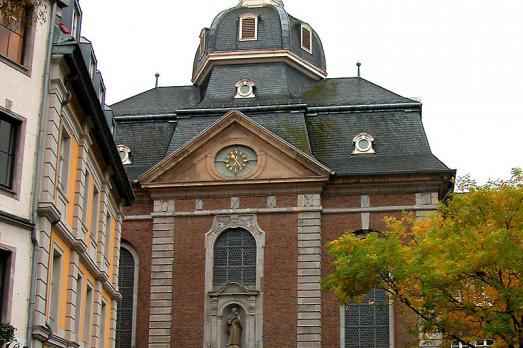
The St. Maximilian Catholic Church or Max Church is a late 18th century Baroque church. Former Franciscan monastery, it became a parish church after the abolition of the monastery in 1804.

Mayor Synagogue in Istanbul

Mayor Synagogue in Istanbul

Istanbul, TR

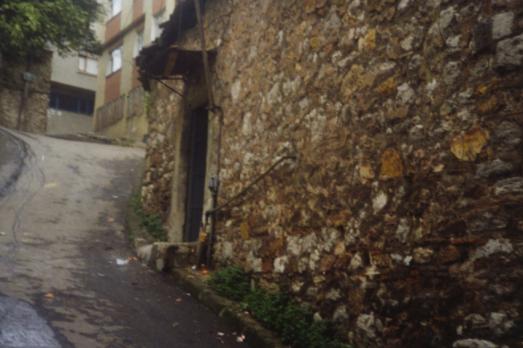
The Mayor Synagogue in Istanbul is a Sephardi synagogue probably dating back to the 19th century. This stone building now serves as a storage.

Măzărache Church, Chisinau

Măzărache Church, Chisinau

Chișinău, MD

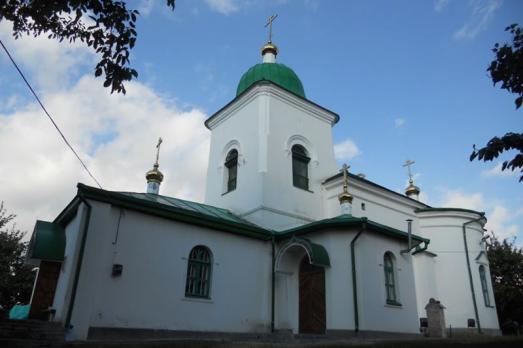
The Church of the Mother of God is the oldest surviving religious building in Chisinau. It features traditional Moldovan architecture from the 15th and 16th centuries, although it was built in the 18th century. It is also known as Măzărache Church after its founder, the merchant Vasile Măzărache.

Mažići Monastery

Mažići Monastery

Mažići, RS

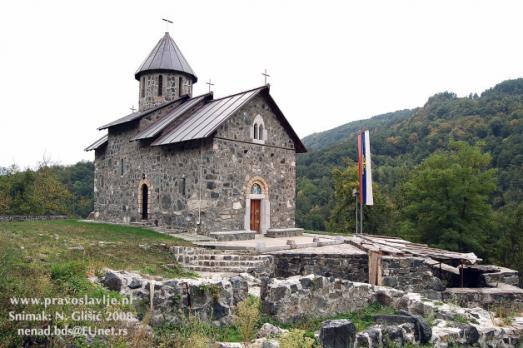
Mažići Monastery was founded in the 12th century. The monastery complex was demolished and rebuilt several times, but it was definitively abandoned at the beginning of the 18th century. At the beginning of the 21st century, the monastery church was renovated, while the renovation of the entire complex is still in progress. During archaeological excavations of the complex, prehistoric burial mounds from the Bronze Age, Roman tombs and a necropolis (from the 9th and 10th centuries) around it were discovered.

Meaux Cathedral

Meaux Cathedral

Meaux, FR

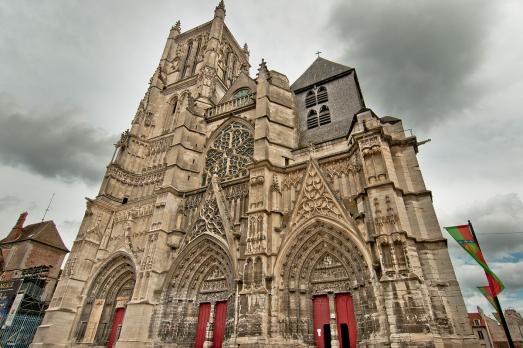
This magnificent Gothic cathedral was built between 1175 and 1540, and its construction was punctuated by a lot of work, renovations due to interruptions in the work or even accidents during the construction. It is considered the sister of Notre Dame de Paris by its size and style.

Meaux Cathedral

Meaux, FR

The construction of the cathedral began with the choir around 1175. The work continued in the 13th century: the current choir, in a radiant Gothic style, was built between 1253 and 1278 by Gautier de Varinfroy. The nave was completed in the 15th century, and work continued until the 16th century (facades of the transepts, radiant chapels, completion of the western portals and the northern tower). Restorations were carried out in the 19th century.

Mechelen Cathedral

Mechelen Cathedral

Mechelen, BE

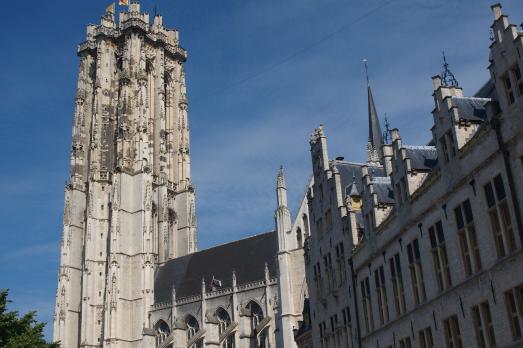
St. Rumbold’s Cathedral was built in the thirteenth century. It was known as ‘the church of the archbishops’ because it was larger and more impressive than the other parish churches. Originally there was a triple-nave cruciform church on the site of the cathedral. Much of the interior and iconoclasms were lost to plundering during the 16th century. The interior of the church is magnificent with works by Anthony van Dyck, Michel Coxie, Gaspard de Crayer, and Abraham Janssens. The showpiece is the high altar by Lucas Faydherbe from 1665.

Mechina of the Yeshiva in Telšiai

Mechina of the Yeshiva in Telšiai

Telšiai, LT

The Mechina building was constructed in 1933-34; two storeys were added in 1937 according to a design by Stanislovas Stulginskis. It was designed as a modernist building, featuring vast plastered, undecorated surfaces. However, its facades were articulated with plain stringcourses and slender pilasters, while a steep roof and a large dormer over the attic space echoed traditional Lithuanian town building. Its main entrance, located on the northwestern façade, was surrounded by modernist multi-faceted windows; the staircase was lit by a vertical strip window. A plaster Star of David was set above the main entrance. The Mechina was a three storey building, which combined a prayer hall on the ground floor, four classrooms on the first floor, and offices on the upper one. The flat ceiling of the prayer hall was supported by four rectangular piers, and the bimah stood in between them. The classrooms were probably used for the teaching of the general subjects, while Torah study took place in the prayer hall. The Torah ark stood at the southeastern wall of the hall. Currently it is a three-storey plastered building, which retains the designed division of the facades with pilasters and stringcourses. Its attic has been converted into a regular additional floor. While fenestration of the southwestern façade has largely survived, that of the northeastern façade has been changed, and its modernist elements as well as the Jewish sign have vanished. All frames of the openings were replaced with modern plastic ones.

Be inspired

Stupkalnis.lt

10 Buddhist stupas to discover in Europe

Stupas are symbols of enlightenment and peace that commemorate different stages of Buddha's life. Since the mid-20th century, thousands of stupas have begun to populate Europe. We have compiled some of the most impressive ones in this list.