Explore Religious Heritage Across Europe

Here you can search for a building to visit. You can use the map find destinations, or you can use the filters to search for a building based upon what different criteria.

Refine search

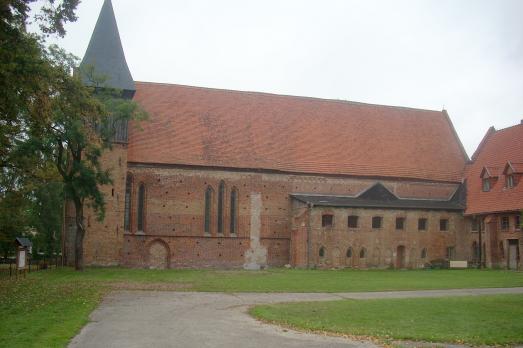
Rühn Abbey Church

Rühn Abbey Church

Rühn, DE

The monastery church is a single-nave flat-roofed hall church and with late Romanesque style elements a typical brick building. It is probably from the 13th century.

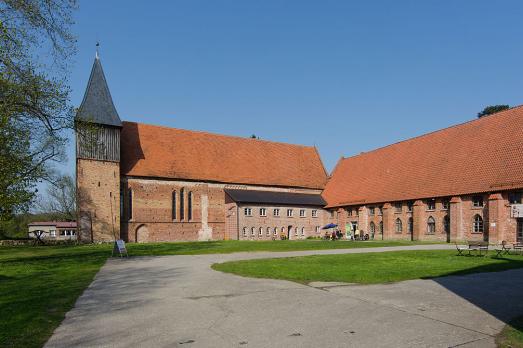
Rühn Monastery

Rühn Monastery

Rühn, DE

Rühn Monastery is a former Benedictine monastery founded in the 13th century. It became a Protestant convent for ladies from 1567 to 1756. The monastery was destroyed during the Thirty Years' War, but it was rebuilt and reintroduced to its function. In the 19th century, the monastery area became the private property of several noble families of Mecklenburg. After the Second World War, it was used as a shelter for war refugees, settlers and orphans. From 1950, a Jugendwerkhof (JWH) was established there, which was dissolved in 1991 and the buildings remained empty for almost 15 years. The monastery is now owned by an association.

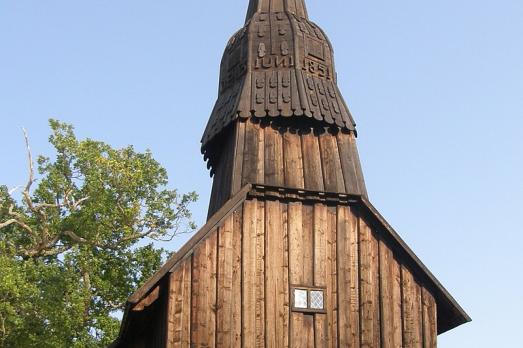
Ruhnu Wooden Church

Ruhnu Wooden Church

Ruhnu, EE

The Ruhnu Wooden Church is the oldest preserved wooden building in Estonia. Its construction began in 1643, during the period of the Swedish Duchy of Estonia (1561-1721). The Stockholm Historical Museum (Historiska museet) houses a collection of glass paintings from the Ruhnu Wooden Church.

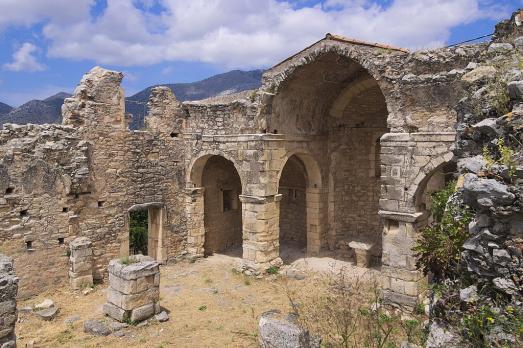
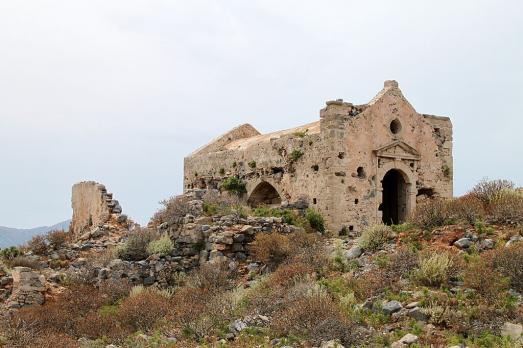
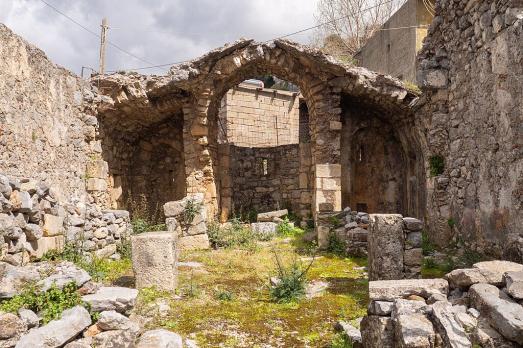
Ruined Cathedral of Episkopi

Ruined Cathedral of Episkopi

Episkopi, GR

The church of Saint John (Agios Ioannis) in Episkopi was built in the 13th century on the foundations of an earlier temple.

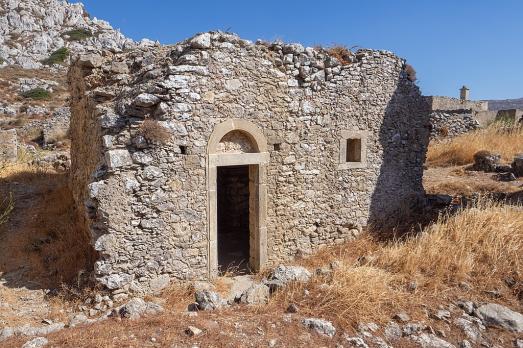
Ruined church of Gramvousa

Ruined church of Gramvousa

Gramvousa, GR

The Church of the Annunciation of Theotokos is a ruined church on the island of Gramvousa, in northwestern Crete.

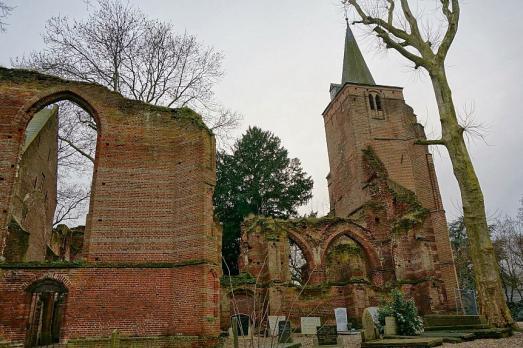
Ruïnekerk

Bergen (NH), NL

Reformed Church. So-called Ruin Church, charmingly situated on the walled churchyard. Five-sided closed 15th century choir with chapel on the north side and an extension on the south side dated 1595 in year anchors. As a result of the destruction in 1574, only parts of the masonry remain of the originally three-aisled nave, which, like the masonry of the choir, is enlivened by natural stone corner and neg blocks; in the north and south facades a segmental arched closed gate with Gothic frame in tuff stone. Restoration 1955-1961, during which the choir was extended by one bay to the west. Internal wooden barrel vault, carved 15th century corbels. Pulpit 18th century, pew 17th century, two copper crowns 17th century; the northern chapel, containing the burial vault of the lords of Nassau-Bergen, is closed off by an oak fence with Corinthian pilaster, mid-17th century. Brick wall, covered by donkey's back around the entire cemetery.

Ruïnekerk

Ruïnekerk

Ammerzoden, NL

Gothic cruciform church with three-aisled nave, transept, both from the first half of the 16th century, and deep, single-aisled choir with polygonal closure, 14th century.

Ruines de l'Abbaye de Fontaine Guerard, Radepont

Radepont, FR

Built between the 12th and 13th centuries, it bears witness to the Anglo-Norman style. During the Revolution, it was sold as a national asset. It will then become a cotton mill, then will be sold to the Salvation Army a few decades later.

Be inspired

Stupkalnis.lt

10 Buddhist stupas to discover in Europe

Stupas are symbols of enlightenment and peace that commemorate different stages of Buddha's life. Since the mid-20th century, thousands of stupas have begun to populate Europe. We have compiled some of the most impressive ones in this list.