
Explore Religious Heritage Across Europe

Here you can search for a building to visit. You can use the map find destinations, or you can use the filters to search for a building based upon what different criteria.

Refine search

Dorpskerk

Numansdorp, NL

Beautiful village church with charming, iconic tower. Characteristic Protestant interior, almost completely filled with pews. The "attention wall" with pulpit and baptismal font is located in the right (= southern) side of the interior. In that wall are also two colorful modern stained glass windows, on either side of the pulpit. This church is listed as a Municipal Monument of the Netherlands.

Dorpskerk

Eelde, NL

The village church in Eelde is originally a Roman Catholic church, which was dedicated to St. Gangulphus. In 1598, stadtholder Willem Lodewijk ordered the conversion to the "reformed" religion by means of a "plakkaet". The name Reformed was not officially introduced until 1815 and the church continued to be called the Dutch Reformed Church until 2005. Since October 2005, the village church has been the church building where the Protestant community of Eelde-Paterswolde holds its weekly services. The Protestant community of Eelde-Paterwolde was created in 2005 from the merger between the Reformed community of Eelde and the Reformed Church of Paterswolde. In the single-nave church from the 14th century, tuff stones from an older church have been incorporated, particularly around the entrance. This earlier church stood on the same site and was already built in the 11th century. The church is built east-west and has a rectangular nave of 8.5 x 28 meters. A narrower, three-sided closed choir has been added to the east side. The stone choir vault was replaced by a wooden ceiling at the beginning of the 18th century. The wooden ceiling was painted with an allegorical representation of life and death, joy and mourning. (see photo below) The painting was probably made by Hermannus Collenius (1650-1723) The pulpit in the church dates from 1621. The wooden pews were replaced by chairs during the restoration of 1973. There are still four gentlemen's pews in the church. In the choir is the gentlemen's pew of the Oosterbroek manor house; against the north wall are two gentlemen's pews of the Lemferdinge manor house. It could not be determined to which manor house the fourth pew belonged. Furthermore, there is a wrought iron holder with a copper baptismal font in the church. During the restoration in 2000, the plasterwork in the church was completely removed and a consecration cross was revealed under one of the old layers of plaster. This cross dates from the pre-Reformation period and was restored and conditioned as far as possible. The cross is located on the wall next to the lord's pew opposite the pulpit. Until 1989, the church was equipped with a mechanical tower clock by H. Detgen in Groningen. Made in 1870. The clock was loaned to the Bell Foundry Museum in Heiligerlee in 1989.

Dorpskerk

Nieuwer ter Aa, NL

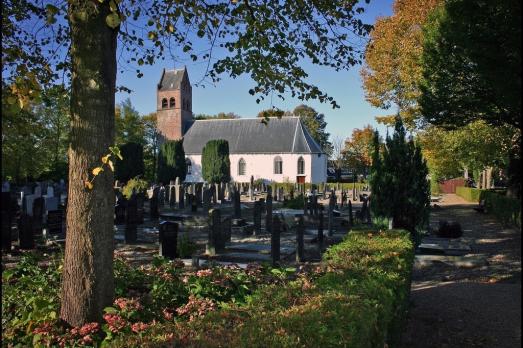
Extremely important historical village church with tower. Particularly important for the English organ, and the series of stained glass windows. This church is listed as a National Monument of the Netherlands.
Dorpskerk

Santpoort-Noord, NL

The village church was also the first 'real' church in Santpoort in terms of size. Dutch Reformed, now PKN. Nowadays the church also offers shelter to all kinds of cultural activities. The first version of the village church dates from 1844. A slender and charming building that was created on the initiative of the miller. In 1916 the church burned down. The story goes that a drunken homeless person, who was looking for shelter from the cold, accidentally knocked over one of the two stoves, after which the church caught fire. There was almost nothing left. A year later, in 1917, the current church could be consecrated on the same spot. With money from the insurance, collections and generous gifts from wealthy Santpoorters from North and South. The contours of the burnt down church were adopted: a hall church with a tower in the middle, the roofs covered with slates. But the style that the Bloemendaal architects J. Mulder and JA van Asdonk gave the building was no longer light and charming but solid, quasi-Romanesque. The church got a sturdy square tower with a matching spire and semi-circular arch spans of windows, sound holes and portal. Funny thing is that the clock, which at that time still served as a watch for ordinary people, is not placed in the middle of the tower but on a corner.

Dorpskerk

Lopik, NL

Historic village church, formerly dedicated to St. Salvator. The small church tower is well under 48 m high (incorrect mention in RCE description).

Dorpskerk

Bloemendaal, NL

Historic hall church with roof turret. Major restoration/renovation 2014-2015, which also included a new studio for Radio Bloemendaal.

Dorpskerk

Nieuwegein, NL

Dutch Reformed Church. Built as village church of Vreeswijk. Oldest church building in present-day Nieuwegein. This church is listed as a National Monument of the Netherlands.
Huizum Church

Huizum Church

Leeuwarden, NL

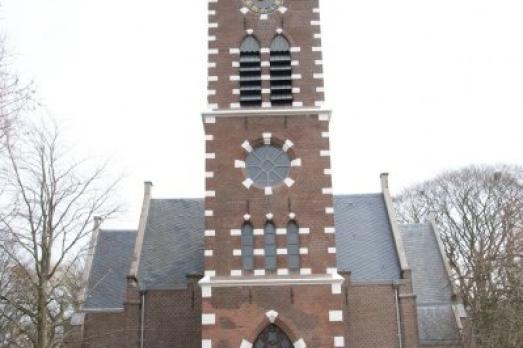
The Dorpskerk Huizum (12th cent.) is the oldest monument of the city of Leeuwarden, has a very valuable interior and is now used for concerts, exhibitions, lectures etc. The great building with old graveyard, bier house etc, was never visited so often as nowadays. Location: Huizum Dorp 67, a 15 minutes walk from the Central Station through a nice 'green blew' area along the beautiful river Potmarge. The old village of Huizum is now surrounded by the town but is still a lovely oasis in the city. See www.dorpskerkhuizum.nl.

Dorpskerk,  Aalsmeer

Dorpskerk, Aalsmeer

Aalsmeer, NL

The village church of Aalsmeer (Dorpskerk) is a Protestant place of worship. The building was completed in 1549 and was originally a Catholic church. It became a Protestant church in 1586. It is currently protected as a National Monument of the Netherlands.
Huizum Church

Huizum Church

Leeuwarden, NL

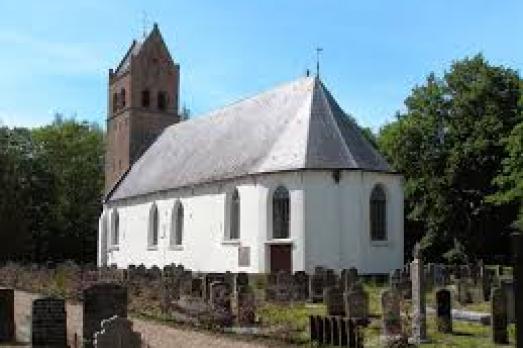
In the south of the capital of Friesland is a real village church: the John the Baptist Church of Huizum. The church has been owned by the Alde Fryske Tsjerken Foundation since 2014. The local commission organizes a range of activities. Due to its special appearance and size (180 seats), the church is also a popular location for commemorations (funerals) and for wedding ceremonies.

Be inspired

Stupkalnis.lt

10 Buddhist stupas to discover in Europe

Stupas are symbols of enlightenment and peace that commemorate different stages of Buddha's life. Since the mid-20th century, thousands of stupas have begun to populate Europe. We have compiled some of the most impressive ones in this list.