Explore Religious Heritage Across Europe

Here you can search for a building to visit. You can use the map find destinations, or you can use the filters to search for a building based upon what different criteria.

Refine search

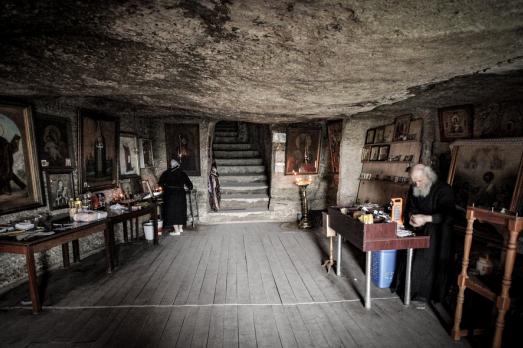
Orheiul Vechi

Orheiul Vechi

Trebujeni, MD

A beautiful and unique experience, the caves at the Orheiul Vechi monastery in Moldovia contain old places of worship and prayer, transporting the visitor back to far simpler times and allowing the imagination to take over.

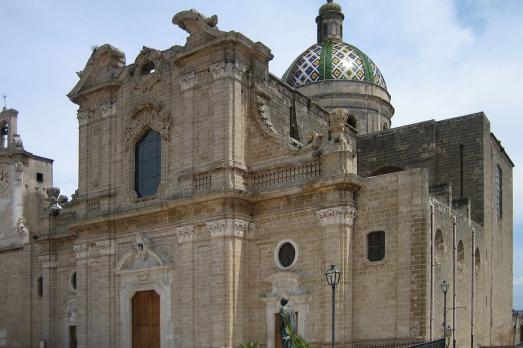
Oria Cathedral

Oria Cathedral

Oria, IT

The current Oria Cathedral is due to Bishop Castrese Scaja who, in 1750, demolished the previous medieval Romanesque church (threatened with collapse after the earthquake of 20 February 1743) and built the new cathedral in Baroque style. During the construction of the new Baroque cathedral, designed by the architect Giustino Lombardi, two green marble columns of the old Romanesque cathedral were purchased for 8000 ducats by the King of Naples to embellish the chapel of the royal palace of Caserta. Of particular interest is the 16th-century "crypt of the mummies" located under the building.

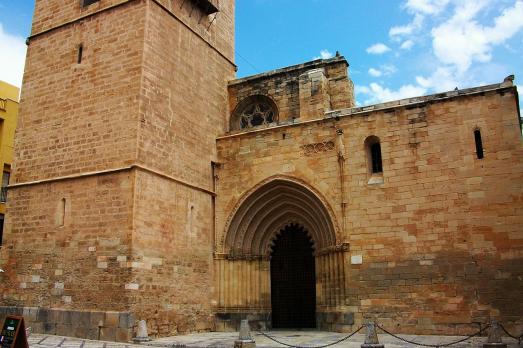
Orihuela Cathedral

Orihuela Cathedral

Alicante, ES

The construction of the cathedral started at the end of the 13th century on certain Visigothic and Hispano-Arab remains. It has a Latin cross plan including a nave and two aisles, an ambulatory and chapels within buttresses. The three portals bears a mix of Gothic, Renaissance and Moorish styles. Annexed to the church is a museum of Sacred Art, housing works by Diego Velázquez and other Spanish painters.

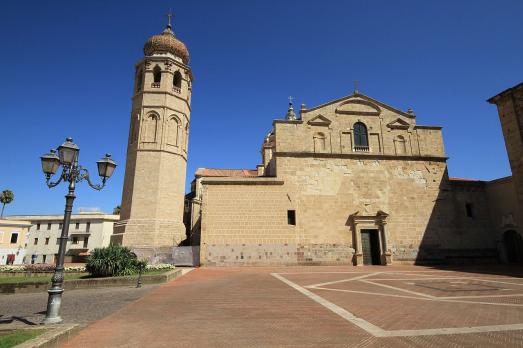
Oristano Cathedral

Oristano Cathedral

Oristano, IT

The existence of Oristano Cathedral is documented from 1131 onwards. Restoration work, commissioned by Archbishop Torgotorio of Muru, was carried out in 1228. In 1348, the transept with four chapels was built in Italian Gothic style. The serious state of dilapidation of the cathedral in the first half of the 18th century led to the reconstruction work that resulted in the present building, sparing little of the original Romanesque-Gothic construction.

Orkanger Church

Orkanger Church

Orkland, NO

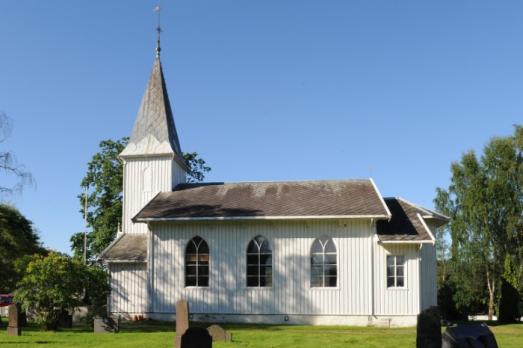
The Orkanger Church is a long church dating from 1892. Initially, the church was characterised by the Swiss chalet style, but the façade was simplified somewhat in 1950 when the church was re-panelled and the tower was modified. The church changed its colour several times from brown to yellow and then from brown to white (in 1991).

Orkdal Church

Orkdal Church

Orkland, NO

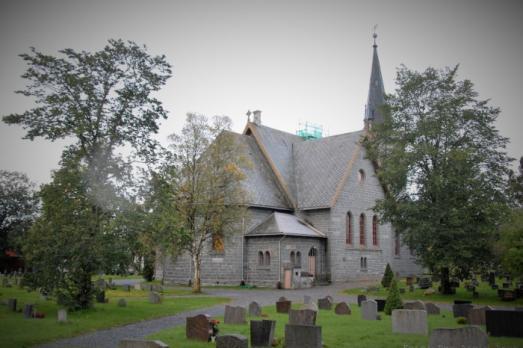
The Orkdal church is a cross church dating from 1893. It is the third church in this town, where churches have been built since the Middle Ages. The first church was made of wood, the second and third of soapstone. The church was designed by Carl Julius Bergstrøm and built by the builder Hans Kunig.

Örkelljunga kyrka

Örkelljunga kyrka

Örkelljunga, SE

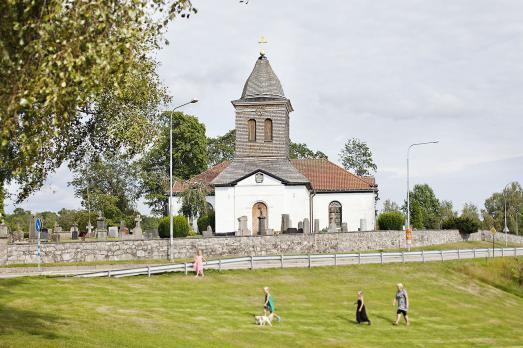
Örkelljunga Church was probably built in the early 14th century. At the end of the 17th century, the church was too small, so it was extended to the west with a wooden extension, which was replaced by a stone extension in 1782. Above this, a wooden tower covered with wood chips was built. At the same time, the bell tower was demolished. During the 19th century, the population increased again and the church had to be extended again. In 1804-05 the north transept was added and the brick arches of the nave were demolished. In 1846, the south transept was added. The apse of the church was demolished in 1817, but rebuilt in 1955 as a sacristy.

Orléans Cathedral

Orléans Cathedral

Orléans, FR

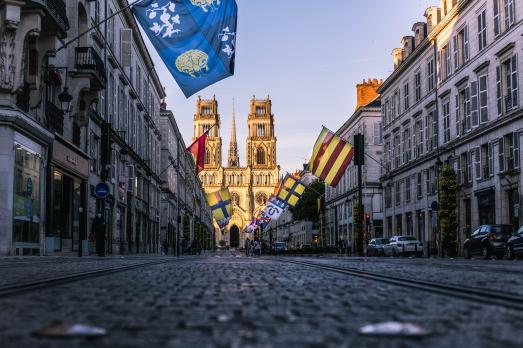
After its first foundations in the 7th century, the Romanesque church partially collapsed in 1278. A new church was then built and the first stone laid by Gille Pasté, bishop, in 1287. At the beginning of the 16th century, the cathedral was almost completed. However, it was badly damaged in 1568, and King Henry IV began its reconstruction in 1601, which lasted throughout the 17th and following centuries. The facade dates from the 18th century.

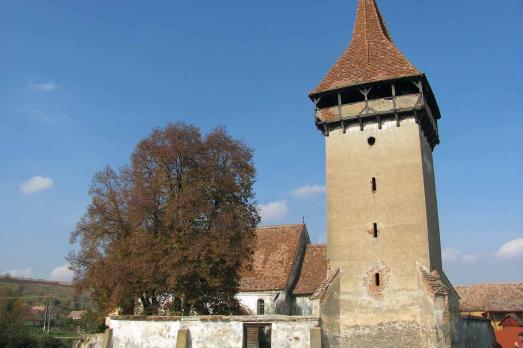
Ormeniș Fortified Church

Ormeniș Fortified Church

Ormeniș, RO

The village of Ormeniș was first mentioned in documents in the year 1319. It is part of the so-called “Kokelburger Komitat”, a kind of province or administrative area. Ormeniș belongs to a group of 13 villages from the region that made efforts to win a trial against their landlords in the 18th and 19th century as they felt their traditional freedom and rights were not being respected. The hall church was erected in thirmesch_altare 16th century, boasts a polygonal choir, and has galleries on three sides which are supported by wooden pillars. The Baroque altar dating back to 1720 is subdivided by massive Corinthian pillars and shows a scene from the Last Supper on the predella and a scene from the Entombment of Christ on the top. The centre of the middle part displays a picture of the Crucifixion with Maria, Maria Magdalena and John while the Saints Peter and Paul are shown on the left and right to complete the altar. The even older baptismal (1703) is made of blazed clay and has the form of a chalice. The organ with its 6 + 2 organ stops were brought to Ormeniș in 1875. In the year 1937 the church was renovated by the architect Schullerus. The almost oval ring walls and the bell tower with its wall-walk were most probably erected in the 17th century.

Ormøy Church

Ormøy Church

Oslo, NO

Ormøy church is a long church dating from 1893. The church was designed by architect Bernhard Christoph Steckmest and prefabricated by Strømmen Trævarefabrik. The church is characterised by a neo-gothic and Swiss-style. Attempts were made to set fire to the church in September 1992, but the fire was extinguished before it had time to cause any major damage.

Be inspired

Stupkalnis.lt

10 Buddhist stupas to discover in Europe

Stupas are symbols of enlightenment and peace that commemorate different stages of Buddha's life. Since the mid-20th century, thousands of stupas have begun to populate Europe. We have compiled some of the most impressive ones in this list.