Explore Religious Heritage Across Europe

Here you can search for a building to visit. You can use the map find destinations, or you can use the filters to search for a building based upon what different criteria.

Refine search

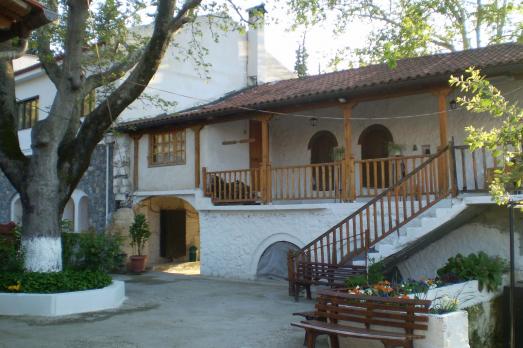
Monastery of St. Anargyroi

Monastery of St. Anargyroi

Ermionida, GR

The Monastery of St. Anargyroi was founded on the 11th, on the site of an ancient Greek temple. Like many monasteries in the region, he participated actively in the War of Independence (1821-1829). Renovated after the Second World War, the monastery was entrusted to a woman brotherhood.

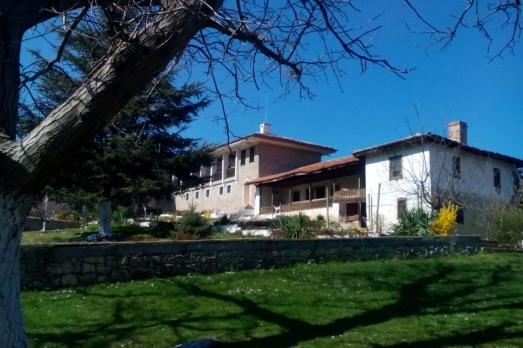
Monastery of St. Athanasius

Monastery of St. Athanasius

Zlatna Livada, BG

The Monastery of St. Athanasius is a female Orthodox monastery located in southern Bulgaria. The current construction dates from the 1970s, when the monastery was traditionally renovated on the initiative of the Ministry of Culture, after years of neglect under the communist regime. By its size and space, it is one of the largest monasteries in present-day Bulgaria. According to Bulgarian archaeological and historical research in 2004, it is the oldest active monastery in Europe, believed to have been founded by Athanasius of Alexandria in 344.

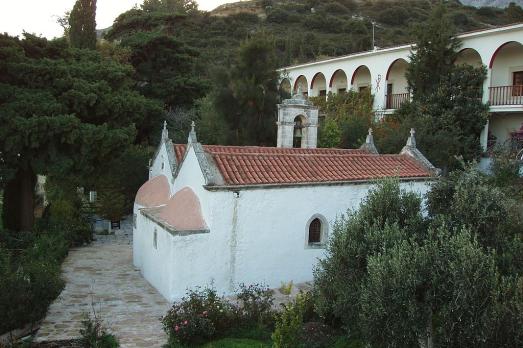
Monastery of St. George Gorgolaini, Kato Asites

Monastery of St. George Gorgolaini, Kato Asites

Kato Asites, GR

The Monastery of Saint George Gorgolaini, 1 km away from the village of Kato Asites, was founded by Archpriest Sylvester in the 13th century. The monastery church was built in 1627. The monastery is surrounded by nature and one of its hundred-year-old cypress trees has been declared a protected natural monument.

Monastery of St. George the Victorious

Monastery of St. George the Victorious

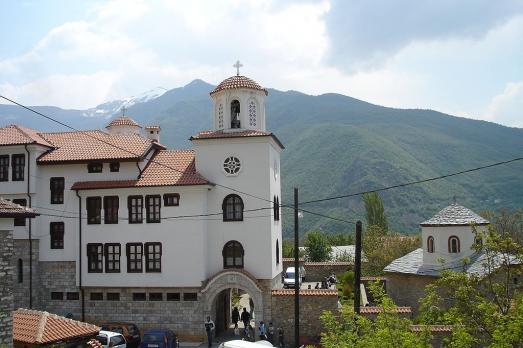
Rajchica, MK

The Monastery of St. George the Victorious is a female Orthodox monastery probably founded in the early 14th century, but the present complex was only built in 1835, on the initiative of Archimandrite Arsene of Galichnik. The church was painted and decorated between 1840 and 1852. Closed by the communist government in 1945, the monastery was converted into stables and fell into ruins. In 1999, a religious community resumed its activity.

Monastery of St. Ignatios

Monastery of St. Ignatios

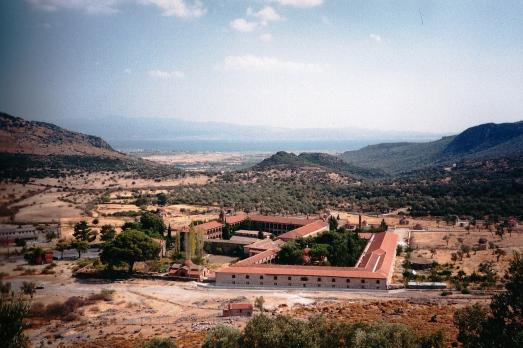
Lesbos, GR

The Monastery of St. Ignatios was founded on the site of an earlier monastery in 1526. Like many Greek monasteries, the Monastery of St. Ignatios played an active role against the Ottomans, and against the Nazi occupation. The monastery contains a library with 516 manuscripts, some of which date back to the 9th century.

Monastery of St. Jovan Bigorski

Monastery of St. Jovan Bigorski

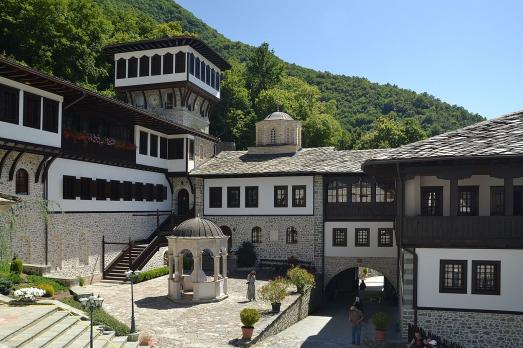
Rostushe, MK

The Monastery of St. Jovan Bigorski, founded in 1020, consists of a church, an ossuary, a defence tower, monastery buildings and a newly built visitors' house. Attacked by the Turks in the 16th century, its reconstruction did not begin until 1743. Between 1812 and 1825, the complex was considerably enlarged. The monastery is famous for its carved wooden iconostasis made between 1829 and 1835 and for its icon of St. John the Baptist, which is said to have miraculous properties.

Monastery of St. Leontius

Monastery of St. Leontius

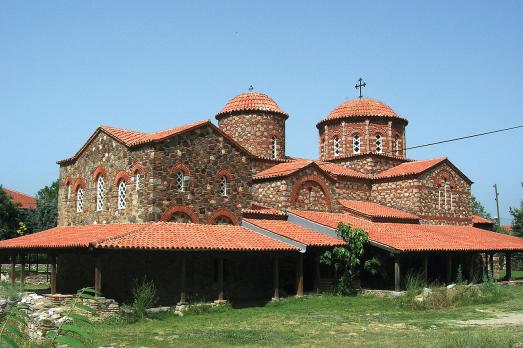
Strumica, MK

The Monastery of St. Leontius is a sacred complex located on an archaeological site with remains dating back to the 4th century. The site contains three churches, architectural remains, annex buildings and a monastic complex, two baths and a multi-storey Christian necropolis. The frescoes of the interior were painted in three periods, in the 10th, 11th and 12th centuries.

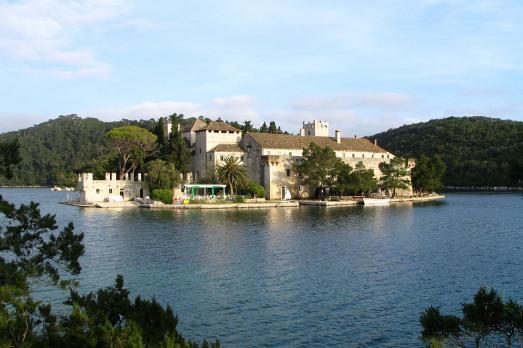
Monastery of St. Mary

Monastery of St. Mary

Goveđari, HR

The monastery of St. Mary is a 12th-century Benedictine monastery located on an islet of the Great Lake of Mljet. The Romanesque monastery has been rebuilt several times. The current building is a two-storey Renaissance building bounded on both sides by a courtyard, and the main driveway towards the courtyard has an arched corridor. The complex, with a tower at the southeast corner, forms a defensive unit.

Monastery of St. Nicholas Anapausas

Monastery of St. Nicholas Anapausas

Kalabaka, GR

The present building of the Monastery of St. Nicholas Anapausas dates from the early 16th century and probably owes its name to an ascetic who lived on the rock in the 14th century. Fully adapted to the rock on which it was built, the monastery is suspended on several floors. The monastery was famous for having been painted by the Cretan painter Theophanes the Cretan in 1527 and houses one of the most important collections of post-Byzantine painting.

Be inspired

Stupkalnis.lt

10 Buddhist stupas to discover in Europe

Stupas are symbols of enlightenment and peace that commemorate different stages of Buddha's life. Since the mid-20th century, thousands of stupas have begun to populate Europe. We have compiled some of the most impressive ones in this list.