Explore Religious Heritage Across Europe

Here you can search for a building to visit. You can use the map find destinations, or you can use the filters to search for a building based upon what different criteria.

Refine search

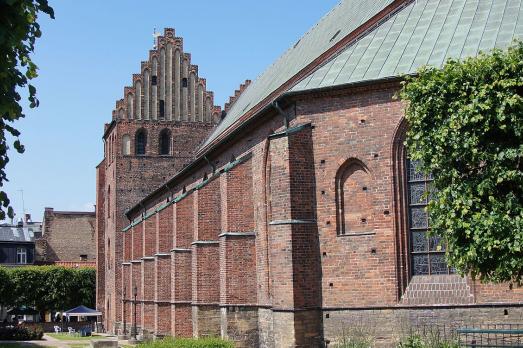
Sankta Maria kyrka

Sankta Maria kyrka

Helsingborg, SE

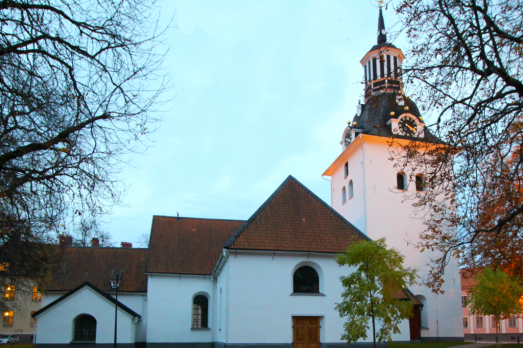
St. Mary's Church is the oldest church in the city and was built in the 12th century in the Romanesque style. In the 15th century it was replaced by a three-aisled brick church in the Gothic style, but sandstone from the old church was used for the base of the choir and the west aisle. The stepped gable tower was added in the 16th century and in the 19th century the lead roof was replaced by a copper roof. In 1843, the south porch and the north vestry were demolished when the church was restored according to the plans of Carl Georg Brunius. However, the vestry was rebuilt in 1953 according to the plans of Gustaf W Widmark, using the old vestry as a model.

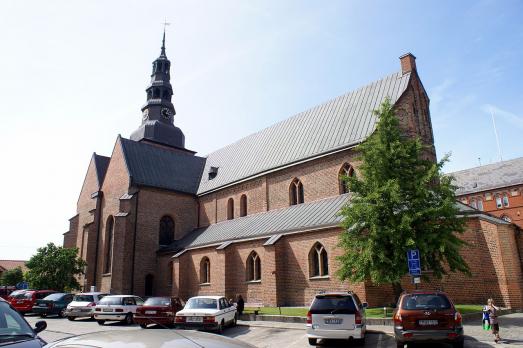
Sankta Maria kyrka

Sankta Maria kyrka

Ystad, SE

St Mary's was built in the 13th century as a three-aisled church in the Romanesque style. In the 14th century, the church was extended with the Holy Cross Chapel, which was however demolished in 1840. In the 15th century, the church that exists today was built. The nave was extended to the ambulatory which, together with the choir with its characteristic pointed arches, has a distinct late Gothic style.

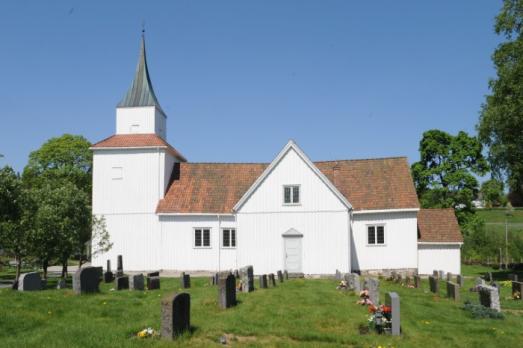
Sannidale Church

Sannidale Church

Kragerø, NO

The Sannidale church is a wooden cross-shaped church built in 1771. In 1766, Jakob Matssøn Lund was appointed parish priest of Kragerø and Sannidal, and he is credited with the construction of the church. Jakob M. Lund was originally from Trøndelag, and in addition to theology, he had studied medicine and anatomy. He was the first to practice smallpox vaccination in Norway.

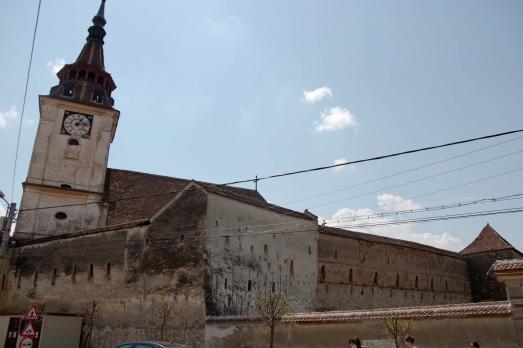
Sânpetru Fortified Church

Sânpetru Fortified Church

Sânpetru, RO

The church in Sânpetru was built in 1794, replacing a medieval basilica from the 14th century, which was demolished after its tower had collapsed twice. The new church was unusually provided with a western chancel and a tower was built in 1817. The interior was endowed in neoclassical style, from organ and scarcely decorated pillars to the column- altar in the chancel. Only ruins are still preserved from the exterior and second curtain wall. But the first fortification wall stands complete even today, preserving its five towers and the two level rooms built on its interior. On the southern side of the assembly the old school and the old town hall were erected. The 13th century pre-reformation chapel was fortified in the 15th century by addition of two levels. Valuable mural paintings from 1400 decorate the chapel’s walls.

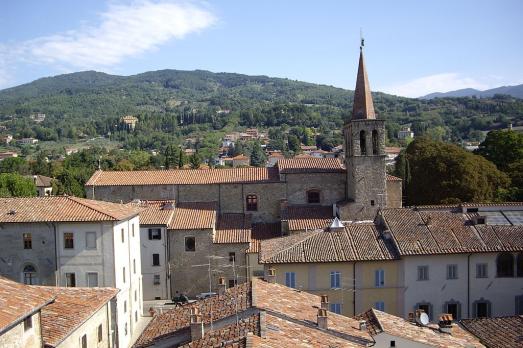
Sansepolcro Cathedral

Sansepolcro Cathedral

Sansepolcro, IT

The present cathedral of Sansepolcro was built on the site of a former abbey church built around the 11th century for a first Benedictine monastery, which passed to the Camaldolese congregation in the 11th century. It was restored in the 14th century and several times thereafter. The church did not become a cathedral until 1520.

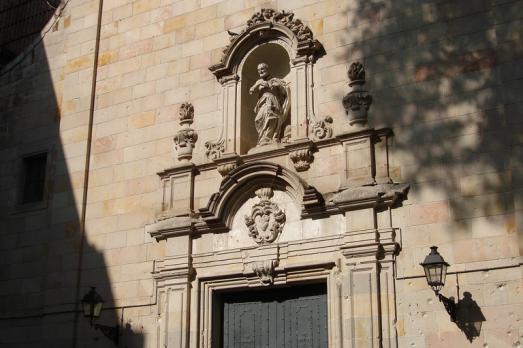
Sant Felip Neri

Sant Felip Neri

, ES

The church of Sant Felip Neri dates from the 18th century and has a distinctive baroque style. The building was badly damaged during the Spanish Civil War and it still bears traces of this conflict on its facade.

Sant Feliu de Barruera

Sant Feliu de Barruera

Barruera, ES

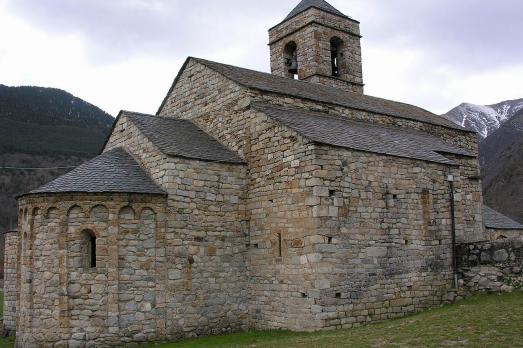
Sant Feliu de Barruera is one of the Catalan Romanesque churches in the Bohí Valley, a UNESCO World Heritage Site. Mentioned since the 11th century, the church has been affected by successive works, the last of which dates back to the 1970s.

Sant Joan de Caselles

Sant Joan de Caselles

02, AD

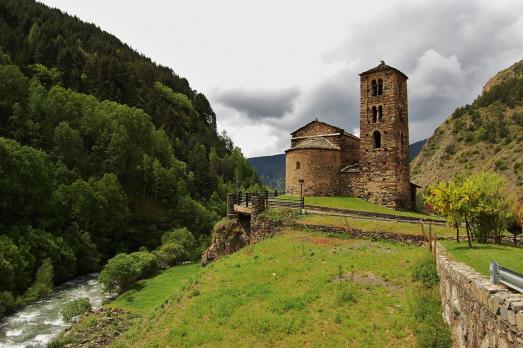
Sant Joan de Caselles is an Andorran Romanesque church first mentioned in the 14th century, but it is believed to date from the 12th century. The decorated interior of the church was rediscovered during the 1963 restoration campaign.

Sant Miquel d'Engolasters

Sant Miquel d'Engolasters

08, AD

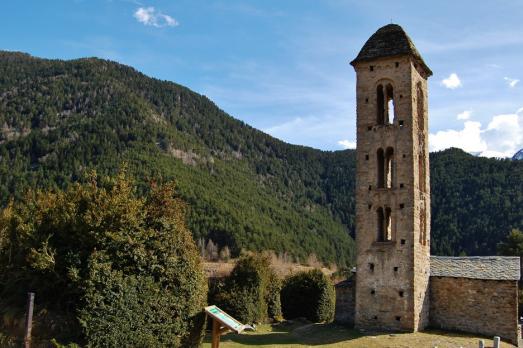
The church of Sant Miquel d'Engolasters is a Romanesque building from the first half of the 12th century. The apse has been decorated with an exact reproduction of the original Romanesque murals currently in the National Museum of Art of Catalonia in Barcelona.

Sant Miquel de Campanet

Illes Balears, ES

This temple, which for eight centuries has not lost its cult, was converted into a Christian church, after the conquest of Mallorca by King James I (1229), of the Crown of Aragon, and is oriented to the east by where the sun rises, as the Arabs used to do when building a mosque. It is very likely that the Arabs found in this sacred place a Paleo-Christian temple from the earlier Byzantine period. The church was in the 13th century the first parish of Campanet (a large municipality that also consisted of Sa Pobla i B??ger and the entire scattered rural population). In front of the church is the old cemetery that was used, until the new parish was inaugurated in the town of Campanet, in the 15th century. Later, when it was forbidden to bury in urban centers in the 17th century, this medieval cemetery was used again for a few more centuries, until the new municipal cemetery of Campanet was built in 1927. It has been obsolete for more than a century, but this feeling of a time that has stopped is endowed with great beauty and it is the obligation of our society to preserve this medieval heritage with dignity.

Be inspired

Stupkalnis.lt

10 Buddhist stupas to discover in Europe

Stupas are symbols of enlightenment and peace that commemorate different stages of Buddha's life. Since the mid-20th century, thousands of stupas have begun to populate Europe. We have compiled some of the most impressive ones in this list.