Explore Religious Heritage Across Europe

Here you can search for a building to visit. You can use the map find destinations, or you can use the filters to search for a building based upon what different criteria.

Refine search

Sankt Karl Kirche

Luzern, CH

In 1934, the building designed by architect Fritz Metzger was inaugurated as the first concrete church in Central Switzerland. The St. Karl Kirche is thus considered the first work of modern church architecture in Lucerne. The parish itself was founded in 1922 and first met in an emergency church on Spitalstrasse. This was used as a parish hall after the inauguration of the church until it was replaced by today's parish center in 1976.

Sankt Lars katolska kyrka

Sankt Lars katolska kyrka

Uppsala, SE

St. Lars Church is a Roman Catholic church in Uppsala. Uppsala did not have a Catholic church until the 20th century and Catholic festivals were only celebrated in private homes. In the 1930s, the need for a Catholic church in Uppsala returned, and in 1943, the first Catholic chapel in Uppsala since the Reformation was founded. In 1985, the St. Lars Church Centre was opened. The church cooperates closely with the Newman Institute in Uppsala. Since 2007, most of the training in philosophy and theology for future Catholic priests in Sweden is based at the Institute.

Sankt Nicolai kyrka

Sankt Nicolai kyrka

Nyköping, SE

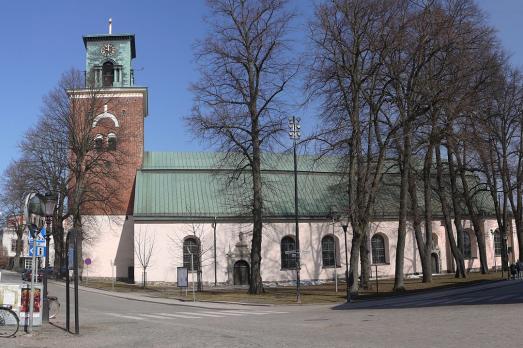
The original Sankt Nicolai church dates from the mid-13th century. In the 15th century, the church received its tower. The spacious sacristy of the church belongs to the 16th century. In 1665 and 1719, the church suffered fires. In the 1920s, the church underwent extensive repairs. Professor Erik Lundberg made architectural observations, and Sigurd Curman and the architect Erik Fant redesigned the interior in 1923-25 in the light of this study.

Sankt Nicolai kyrka

Sankt Nicolai kyrka

Örebro, SE

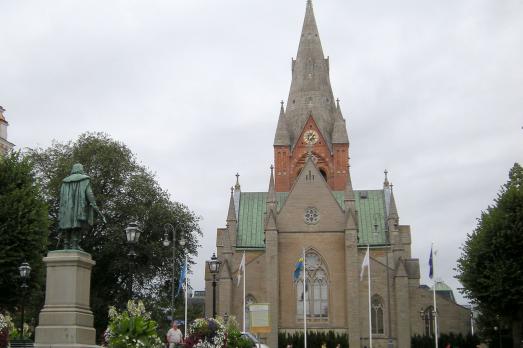
The construction of St. Nicholas' church began in the second half of the 13th century but was probably not completed until the mid-14th century. The oldest parts have Romanesque elements. The church acquired its present appearance and spire during the major restoration of 1863-1900, which emphasised the Gothic style of the church. St. Nicholas Church was originally called Örebro Church because there was only one church in Örebro before the turn of the century.

Sankt Nicolai kyrka

Sankt Nicolai kyrka

Simrishamn, SE

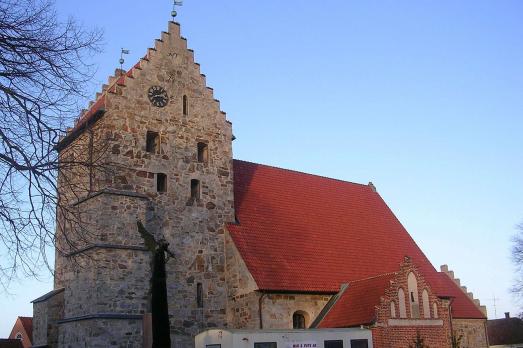
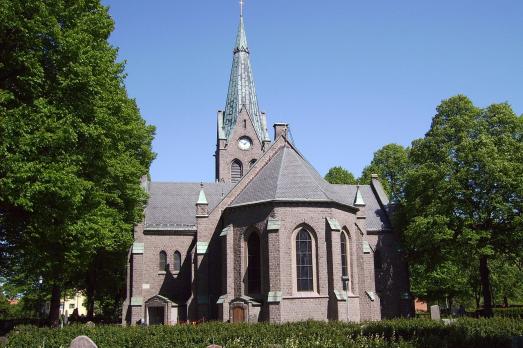
The church of St. Nicolai was consecrated in 1880 on a former fishermen's chapel corresponding to the present choir. In 1953, the church was given its present exterior appearance when the plaster was removed and the quartzite was enhanced.

Sankt Olovs kyrka

Sankt Olovs kyrka

Skellefteå, SE

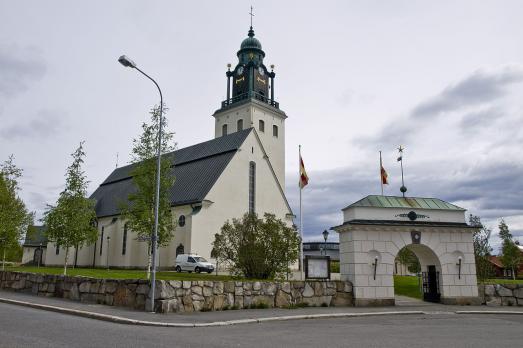
St. Olav's Church, built in the 1920s in the classical style, was designed by Gustav Adolf Falk and Knut Nordenskjöld and was consecrated on 9 October 1927 by Bishop Olof Bergqvist.

Sankt Peders Kirke

Randers, DK

On Sunday, June 16, 1901, the gravel laying took place in the presence of a large congregation The City Council disposed of several vacant plots, but probably considered the area between Gl. Hadsundvej and Fabers Alle, where the Flintebjerg Center (formerly Sct. Josephs Hospital) is located, as the most suitable.

Sankt Petri kyrka

Sankt Petri kyrka

Västervik, SE

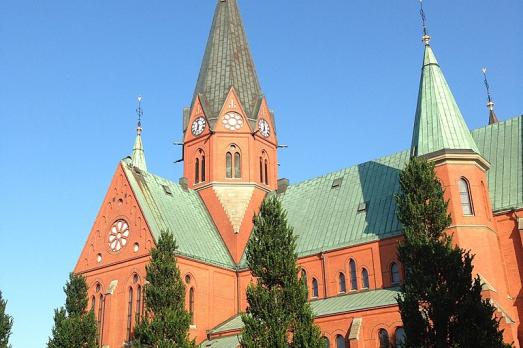
The Sankt Petri Church was built of red brick and sandstone from 1903 to 1905. The architect was Adolf Emil Melander. The church building is characterised by a historical eclectic style with predominantly neo-Gothic elements, which is expressed in the high spire of the central tower and the smaller spires in the body of the building as well as in the portals and lancet windows.

Sankt-Petri-Kirche

Sankt-Petri-Kirche

Hamburg, DE

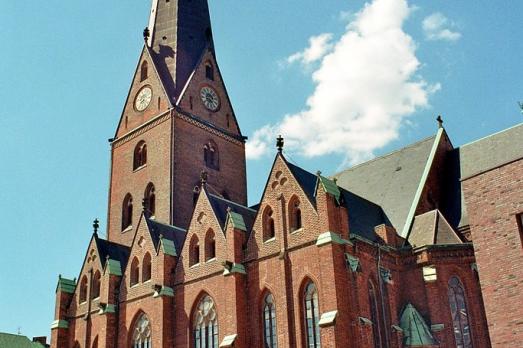
The St. Peter's Church is the oldest parish church in Hamburg. It is named after the Apostle Peter.

Sankta Gertruds kyrka

Sankta Gertruds kyrka

Västervik, SE

The church of St Gertrude was completed in the late 1450s and consisted of the chancel with the sacristy and the nave up to the pair of columns nearest the organ loft. Only one medieval entrance has been preserved, namely the entrance to the choir. The door was probably added after the fire of 1612. The other original entrances have been removed. The tower was built around 1670 and has a tall, narrow spire. In the 1730s the church had to be rebuilt. The north transept was added. Bricks were taken from the ruins of the nearby castle for construction. It was not until the 1780s that the organ, a Wistenius organ, was restored by Pehr Schiörlin, a disciple of Jonas Wistenius, and the spire was replaced by a hood with a lantern. The architect was Carl Fredrik Adelcrantz.

Be inspired

Stupkalnis.lt

10 Buddhist stupas to discover in Europe

Stupas are symbols of enlightenment and peace that commemorate different stages of Buddha's life. Since the mid-20th century, thousands of stupas have begun to populate Europe. We have compiled some of the most impressive ones in this list.