Explore Religious Heritage Across Europe

Here you can search for a building to visit. You can use the map find destinations, or you can use the filters to search for a building based upon what different criteria.

Refine search

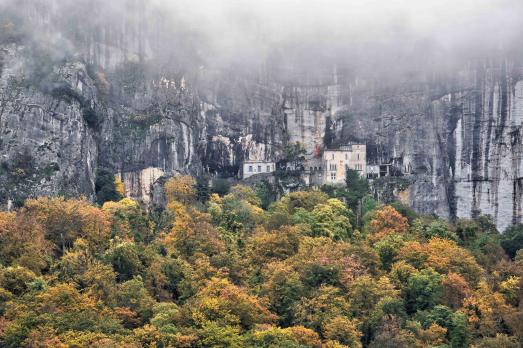
Sanctuary of Sainte-Baume

Sanctuary of Sainte-Baume

Plan-d'Aups-Sainte-Baume, FR

The sanctuary of Sainte-Baume, also known as the Sainte-Marie-Madeleine cave, is a sanctuary erected in a cave in the Sainte-Baume massif. It is an important pilgrimage site for the cult of Saint Mary Magdalene, evangeliser of Provence. As early as the 5th century, Saint John Cassian founded the first priory there. Throughout the 14th and 15th centuries, popes, kings and princes made pilgrimages to the cave, one of the most famous in Christianity. The Revolution initiated a period of uncertainty for the cave, which changed owners quite frequently until the cave became the property of the municipality of Plan d'Aups in 1910. A community of four Dominican friars was re-established in the summer of 2002.

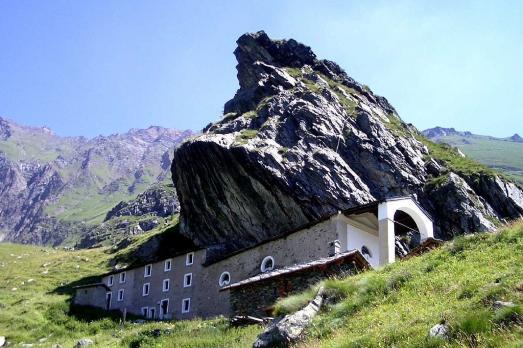
Sanctuary of San Besso

Sanctuary of San Besso

Torino , IT

The sanctuary of San Besso is located in Val Soana, at a height of 2019m above sea level. The church is built under a monolithic rock, Mount Fautenio, which is a bout 60m high and 40m wide. It is that the rock contains energetic powers. Mount Fautenio is mentioned by many sources as a place where lithic cults gathered and where pre-Christian practices took place. The origins and evolution of these practices are lost over centuries, and now the place is foremost a place of devotion to the Christian saint.

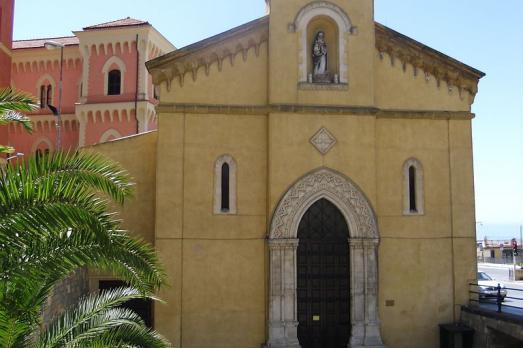
Sanctuary of San Calogero

Sanctuary of San Calogero

Agrigento, IT

The sanctuary of San Calogero dates back to the 13th and 14th centuries. In 1573, eighty-six citizens of the town organized themselves into a brotherhood to enlarge and rebuild the church so that it could become an oratory for the faithful. In 1598 Pope Clement VIII approved the celebration of the feast of St. Calogero throughout Sicily. This recognition gave a great impulse to the cult of the saint and to the sanctuary itself. In 1863 the church was separated from the convent and given to the Franciscan friars. In 1977 the church was raised to the rank of a sanctuary.

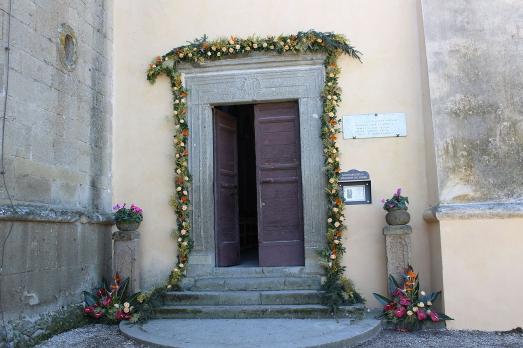
Sanctuary of Santa Maria del Sorbo

Sanctuary of Santa Maria del Sorbo

, IT

The Sanctuary of Santa Maria del Sorbo was probably founded in the 10th century as the chapel of a castle that once stood on the site. In 1427 Cardinal Giordano Orsini granted the remains of the abandoned castle and chapel to the Carmelite order and allowed them to build a convent. The church of the convent, located on the former chapel, houses a miraculous icon of the Virgin Mary, hence its name of sanctuary.

Sanctuary of Santa Maria dell'Aiuto

Sanctuary of Santa Maria dell'Aiuto

Catania, IT

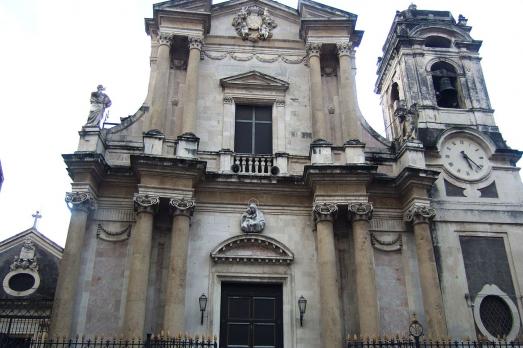
The sanctuary of Santa Maria dell'Aiuto was built in the 17th century. The church is so named because it contains an icon of the Virgin Mary, which is said to be miraculous. The icon was moved there after the destruction of the church of Santi Pietro e Paolo by the earthquake of 1693. In the 19th century, the façade was completed with the bell tower with clock.

Sanctuary of St. Anthony

Sanctuary of St. Anthony

Reggio Calabria, IT

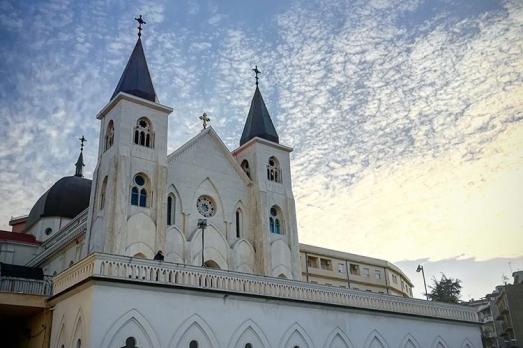
The Sanctuary of St. Anthony was built in the 1930s in a sober Gothic style. Its facade is very particular, divided into three sectors with a central rose window and two lateral bell towers. The crosses above the three sectors are made of wrought iron and the two bell towers are characterized by arrows and high relief decorations.

Sanctuary of St. Joseph

Sanctuary of St. Joseph

Agrigento, IT

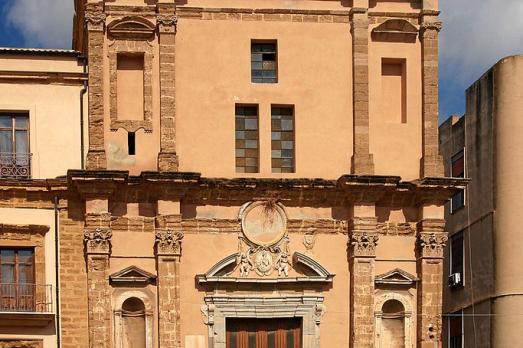
It is known that the shrine of St. Joseph has existed at least since the 16th century. The building was enlarged and completely transformed between 1656 and 1660, and between 1719 and 1726. Many of its parts are incomplete due to periodic revisions and depletion of resources.

Sanctuary of the Madonna del Sasso

Sanctuary of the Madonna del Sasso

Orselina, CH

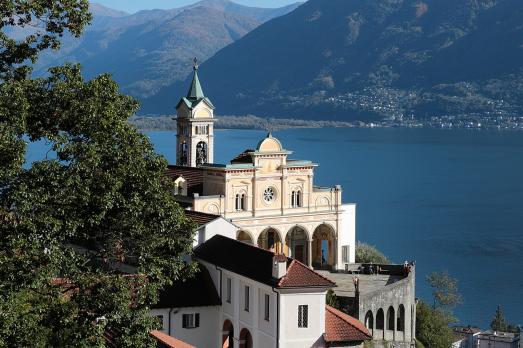
The sanctuary of the Madonna del Sasso was first known at the end of the 15th century, and we know that the first church was consecrated there in 1502. At the end of the 16th century the construction of a second church, located on top of the cliff, was started and consecrated in 1616. With the coronation of the Madonna del Sasso, which took place the following year, a whole series of works to embellish and complete the Sacred Mount began. In 1619 a road was opened on the crest of the hill, with some chapels dedicated to the Mysteries of the Rosary, and later on it would host the chapels of the Way of the Cross. Major works were undertaken between 1891 and 1912, the whole complex at the top of the sacred mountain was heavily remodelled. The convent was enlarged, the neo-Renaissance façade was rebuilt in 1892, in 1895 loggias and terraces were added on the eastern side and the bell tower was rebuilt.

Sanctuary of the Madonna di Monte Berico

Sanctuary of the Madonna di Monte Berico

Vicenza, IT

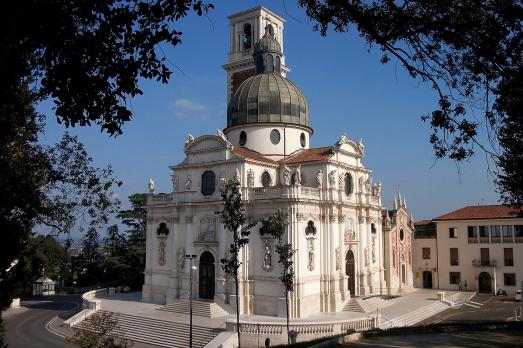
The sanctuary of the Madonna di Monte Berico is the result of the combination of two churches built following plague epidemics in the city: the first church, in Gothic style, dates back to the 15th century. The second church was built in the Baroque style between 1688 and 1703. Monte Berico, on which the complex is located, attracted many pilgrims at the end of the 18th century after the development of the site. After the secularization of the annexed monastery between 1810 and 1835, the friars were able to recover the sanctuary.

Sanctuary of the Madonna di Montecastello

Sanctuary of the Madonna di Montecastello

Tignale, IT

The Church of the Sanctuary of the Madonna di Montecastello was built in the 17th century on the ruins of a castle or group of temples, whose existence dates back to the 9th century. Inside the church are the fresco "The Incoronazione della Vergine" by Giovanni Andrea Bertanza (1570-1630), the altarpiece "Madonna della Gloria e dei Misteri" by Bernardino Gandino and paintings by Andrea Celesti (1637-1712).

Be inspired

Stupkalnis.lt

10 Buddhist stupas to discover in Europe

Stupas are symbols of enlightenment and peace that commemorate different stages of Buddha's life. Since the mid-20th century, thousands of stupas have begun to populate Europe. We have compiled some of the most impressive ones in this list.