Sandtorg Church
Harstad, NO
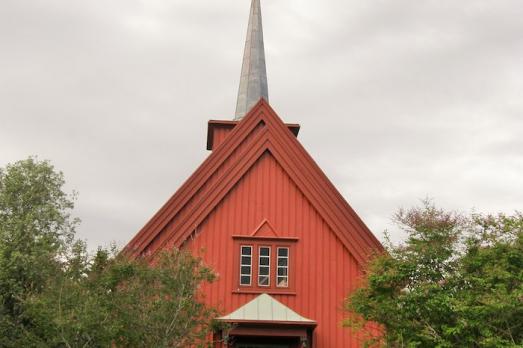
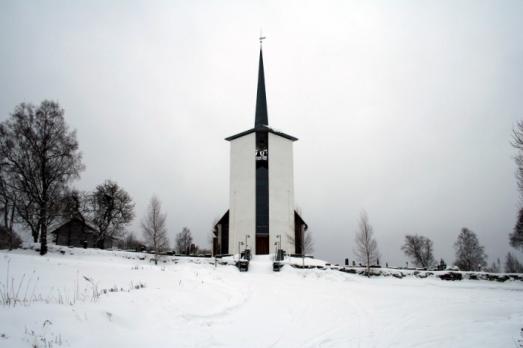
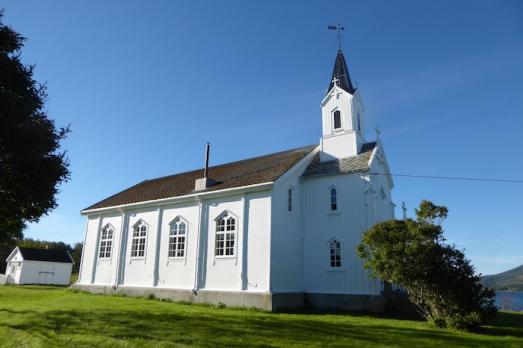
Sandtorg Church, often called Sørvik Church, is a Swiss-style church built in 1932-1933 under the direction of architect Sigurd Bjørhovde.
Here you can search for a building to visit. You can use the map find destinations, or you can use the filters to search for a building based upon what different criteria.
Harstad, NO
Sandtorg Church, often called Sørvik Church, is a Swiss-style church built in 1932-1933 under the direction of architect Sigurd Bjørhovde.
Bergen, NO
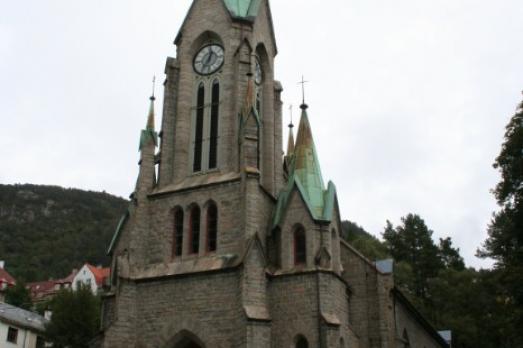
Sandviks Church is a neo-gothic church from 1881. The parish of Sandviken was founded in 1874. A competition was announced for a new church building which was won by the architect Ernst Norgrenn. But after his death in 1880, the plans were modified and completed by the architect Schak Bull.
London, GB
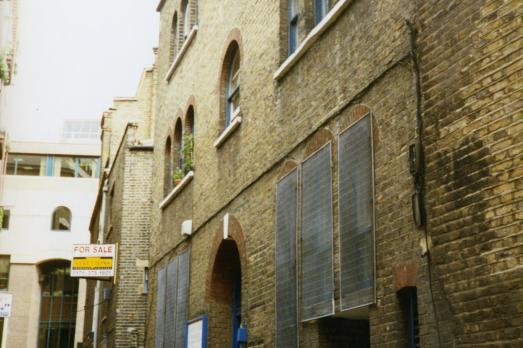
The Sandys Row Synagogue in London was completed in 1766 and rebuilt in 1867. The synagogue was restored in 1904 and in the 1950s. This Neo-Classical brick building still serves as a synagogue.
Sandøy, NO
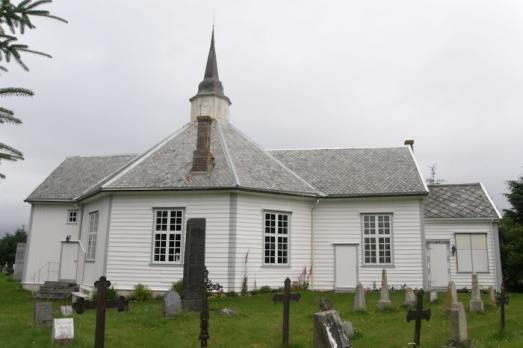
Sandøy church is an octagonal church from 1812. The altarpiece from 1818 was made by woodcarver Jacob Sørensen Giskegaard, better known as Tavle-Jacob.
Vestby, NO
In May 1995, Såner church burned down, which was a long wooden church from 1880 with a lower and narrower choir and with a tower over the porch. The new Såner church is a brick church that built in 2000.
Stockholm, SE
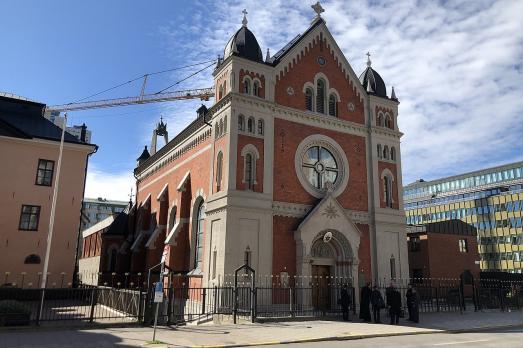
St. Erik's Catholic Cathedral, also known as Stockholm Catholic Cathedral, was built on the initiative of the vicar apostolic Albert Bitter between 1890 and 1892 to plans by the architect Axel Gillberg. He designed the church in the Romanesque Revival style with a round arch, red clinker bricks and grey plaster. The main façade is dominated by a large rose window and crowned by a cross flanked by two low towers. The church became a Catholic cathedral with the establishment of the Catholic Diocese of Stockholm in 1953, following the increase in religious freedom in Sweden.
Stockholm, SE
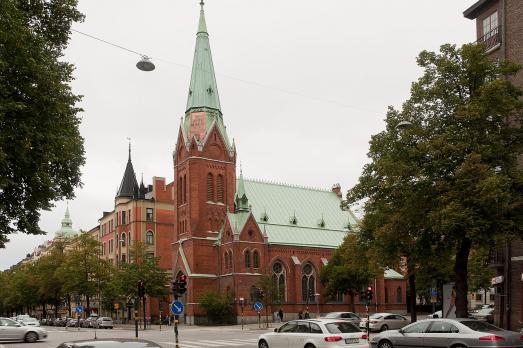
St George's Church was completed in 1890. It was designed by the architect Anders Gustaf Forsberg for the Catholic Apostolic Church, which retained the building until it was handed over to the Greek Orthodox in 1978. The church, in Gothic Revival style, is a long, single-naved church with red brick facades, patterned cornice and mouldings, and grey cement surrounds.
Sankt Ibb, SE
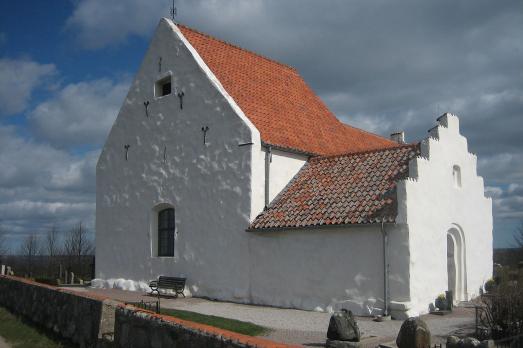
The old church of St. Ibb was built in the 13th century. At the beginning of the 15th century, the church was extended and the choir was added. The roof was vaulted later in the 15th century. During the Danish wars, the church fell into disuse and the tower was demolished in 1726. By the end of the 19th century, the population had grown so much that a new church was built in the middle of Ven. The old church fell into disrepair, but became increasingly popular and was rededicated in 1939.
Åheim, NO
Sankt Jetmund church, also known as 'Jetmunds church' or 'Åheim church', was first built in the 12th century. It was demolished in 1863, but rebuilt and consecrated again in 1957. The architects involved in the reconstruction were Johan Lindstrøm and Cato Engen.
Norrköping, SE
St John's Church was built in the neo-Gothic style in 1904-1906 according to the plans of the city architect Karl Flodin. It was consecrated in 1906 and replaced the old St John's Church, built in 1827 in the centre of Norrköping. The old St John's Church was desecrated at the beginning of the 20th century and converted into a concert hall.
new
For a long time, Europe was ruled by powerful monarchies. Monarchy and religion have been connected since time immemorial. Here are 7 sites across Europe where royalty historically bent the knee to a higher power and received their crown.
Stupas are symbols of enlightenment and peace that commemorate different stages of Buddha's life. Since the mid-20th century, thousands of stupas have begun to populate Europe. We have compiled some of the most impressive ones in this list.
Walter Maria Förderer (1928–2006) was a Swiss architect and sculptor renowned for his neo-expressionist church designs in the 1960s. In this list we have compiled 6 of his church designs that seamlessly integrate religious and secular elements.