
Explore Religious Heritage Across Europe

Here you can search for a building to visit. You can use the map find destinations, or you can use the filters to search for a building based upon what different criteria.

Refine search

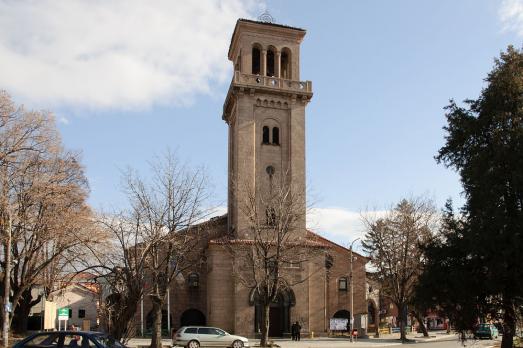
Dormition of the Virgin Mary, Pazardzhik

Dormition of the Virgin Mary, Pazardzhik

Pazardzhik, BG

The Dormition of the Virgin Mary is the largest preserved neo-Nazi church in the country. Built in 1836 - 1837, the church is famous for its iconostasis made of boiled walnut wood and carved with very artistic woodwork by the masters of Debar for ten years. The bell tower on the west façade was built in 1906 and completed in 1932-34.
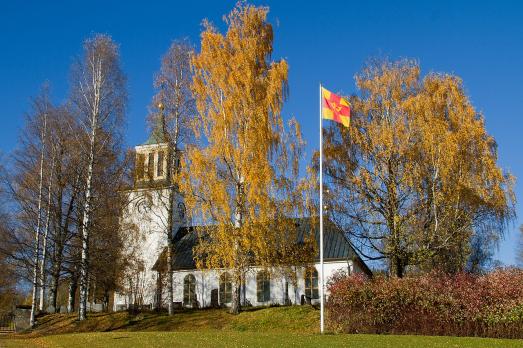
Dorotea kyrka

Dorotea kyrka

Dorotea, SE

The Dorotea Church is a 1934 reconstruction of an old church from the early 19th century. The new church was built in wood according to the plans of Evert Milles.

Dorpskerk

Goudriaan, NL

Dutch Reformed Church. Late Gothic village church with single-aisled nave and deep, three-sided closed choir. Heavy brick tower on the west side, decorated by series of narrow, blind niches and crowned by an eight-sided, constricted spire.

Dorpskerk

Opperdoes, NL

The Dorpskerk is a one-nave, five-sided closed building with a tower, situated on a slightly raised churchyard. Pulpit from 1688 with non-belonging but dating from the same period rear bulkhead and sounding board; oak baptismal fence 1752; copper baptismal arch 1753, precentor's lectern 18th century, two light arms with candlestick from the 17th century, two wall arms from the 17th century, a sixteen-armed crown with shields from the 17th century. The organ made in 1874 by KP van Ingen. This church is listed as a National Monument of the Netherlands.

Dorpskerk

Schipluiden, NL

Dutch Reformed Church. Late Gothic village church from the first half of the 16th century, consisting of a single-aisled nave with wooden bell tower (1810) and a three-bay deep, narrower choir with three-sided closure. West tower demolished in 1810. Windows with brick tracery; wooden barrel vaults with tie beams and corbels, the supporting stones of which have carved coats of arms. Restored 1956-1958. The inventory includes: simple pulpit, 17th century. with copper lectern and two candle holders; baptismal fence with twisted copper baptismal arch, crowned by the village coat of arms; carved choir fence, 17th century, with arched panels, balusters and a raised central section with pediment in the parapet; two lords' pews with canopies, in which coats of arms, the most beautiful dated 1662; a lords' pew without canopies, decorated with arched panels in the choir, 17th century; in the choir closure a richly carved epitaph for WH van Steenbergh, 1788; polychrome Ten Commandments board, 17th century; organ front from 1869; a copper chandelier, circa 1700; several tombstones, 16th and 17th century. Mechanical tower clock, Van Bergen, electric winding. A stone sundial is mounted in a buttress of the church.

Dorpskerk

Boijl, NL

Protestant church and bell tower of the Protestant Regional Community of Frieslands End.

Dorpskerk

Dorpskerk

Akersloot, NL

The Dorpskek in Akersloot was originally erected in the 13th century on the foundations of a Romanesque church. The current building is the reconstruction of 1837 as the previous building had to be demolished due to its deterioration.

Dorpskerk

Goudswaard, NL

Dutch Reformed Church. Rectangular hall church with wooden barrel vault and tie beams, lit by round arch windows, 18th century. Simple tower with constricted spire, probably from 1721. The inventory includes: a pulpit in Louis XVI forms with a copper lectern and baptismal fence holder. A baptismal fence with a copper baptismal arch from the same period and a precentor's lectern. Four simple benches, two of which with a canopy, 18th century. Three copper crowns, 18th century. Some tombstones from the 16th and 17th centuries. Single manual organ, made in 1809 by PJ Geerkens. Restored in 1982 by Leeflang Orgelbouw. ​​Bell frame with bell by P. Waghevens, 1503, diam. 82 cm and a bell by an anonymous founder, 14th or 15th century, diam. 60.5 cm.

Dorpskerk

Driewegen, NL

Dutch Reformed Church. Rectangular hall church, altered internally and externally in 1914, but mainly preserved in the form in which it was founded in 1678. Stately brick facade, decorated with natural stone carvings. Roof turret above the front facade. Internally sculpted pulpit, dated 1679. Entrance to the church grounds flanked by brick pillars with shield-bearing lions, coats of arms of Driewegen and Coudorpe. Bell tower with bell by Nicolaas Muller, 1734, diam. 70 cm. Mechanical tower clock, F. van de Kerkhof, 1906.

Dorpskerk

Santpoort-Noord, NL

The village church was also the first 'real' church in Santpoort in terms of size. Dutch Reformed, now PKN. Nowadays the church also offers shelter to all kinds of cultural activities. The first version of the village church dates from 1844. A slender and charming building that was created on the initiative of the miller. In 1916 the church burned down. The story goes that a drunken homeless person, who was looking for shelter from the cold, accidentally knocked over one of the two stoves, after which the church caught fire. There was almost nothing left. A year later, in 1917, the current church could be consecrated on the same spot. With money from the insurance, collections and generous gifts from wealthy Santpoorters from North and South. The contours of the burnt down church were adopted: a hall church with a tower in the middle, the roofs covered with slates. But the style that the Bloemendaal architects J. Mulder and JA van Asdonk gave the building was no longer light and charming but solid, quasi-Romanesque. The church got a sturdy square tower with a matching spire and semi-circular arch spans of windows, sound holes and portal. Funny thing is that the clock, which at that time still served as a watch for ordinary people, is not placed in the middle of the tower but on a corner.

Be inspired

Stupkalnis.lt

10 Buddhist stupas to discover in Europe

Stupas are symbols of enlightenment and peace that commemorate different stages of Buddha's life. Since the mid-20th century, thousands of stupas have begun to populate Europe. We have compiled some of the most impressive ones in this list.