Explore Religious Heritage Across Europe

Here you can search for a building to visit. You can use the map find destinations, or you can use the filters to search for a building based upon what different criteria.

Refine search

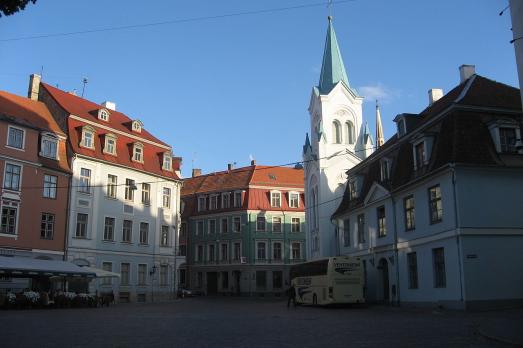
Church of Our Lady of Sorrow

Church of Our Lady of Sorrow

Rīga, LV

The Church of Our Lady of Sorrow was built in 1785 and rebuilt in 1860 in the neo-Romanesque style. The walls of the church are plastered and painted in light blue-green and white, maintaining the colour range typical of classicism. In 1780, Emperor Joseph II of the Holy Roman Empire visited Riga. In view of the small size of the Catholic chapel he promised, in a conversation with Catherine II of Russia, to defend and support in every way the Catholic intention to build a new stone church in Riga. This permission was soon granted. In addition, the emperor and his mother, Maria Theresa, made donations for the construction of the church. Construction of the church began in 1784 and was completed in 1785.

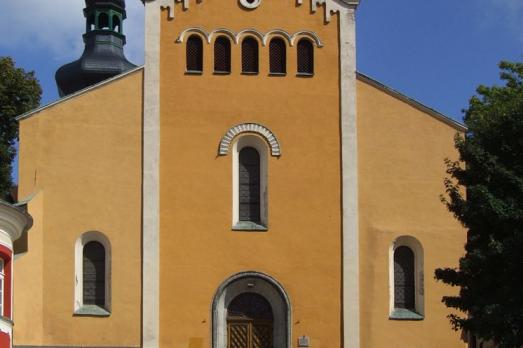
Church of Our Lady of Sorrows and St. Adalbert

Church of Our Lady of Sorrows and St. Adalbert

Opole, PL

The Church of Our Lady of Sorrows and St. Adalbert is a Gothic building with a Baroque interior and a neo-Romanesque façade. A church already existed there in the 10th century and was handed over to the Dominicans in 1304. In 1399 they built a brick church in Gothic style, which was consecrated in 1430. In the 17th century, the temple was destroyed by a fire and then by the Swedish army during the Thirty Years' War. In 1739 the church was rebuilt in Baroque style, leaving the northern nave Gothic. In 1810, the monastic property was secularised; the church became a warehouse and part of the hospital. From 1820, services were resumed and the church became a branch of the Holy Cross parish of Opole. In 1875, the tower was added and the roof was replaced.

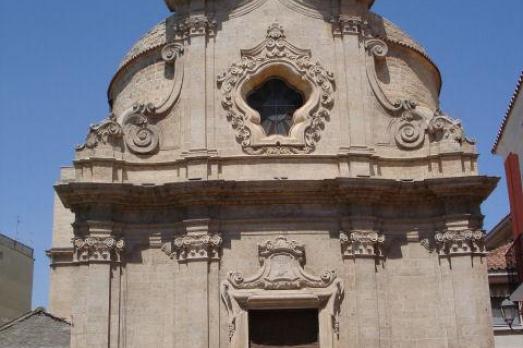
Church of Our Lady of Sorrows

Church of Our Lady of Sorrows

Foggia, IT

The Church of Our Lady of Sorrows was built from 1739 to 1741 in the Baroque style. The church was built to house the brotherhood of Maria SS. dei Sette Dolori which was first based in the church of S. Eligio (from 1711 to 1715), then in the church of Succorpo (from 1715 to 1741) and finally settled in the church of Our Lady of Sorrows.

Church of Our Lady of the Angels

Church of Our Lady of the Angels

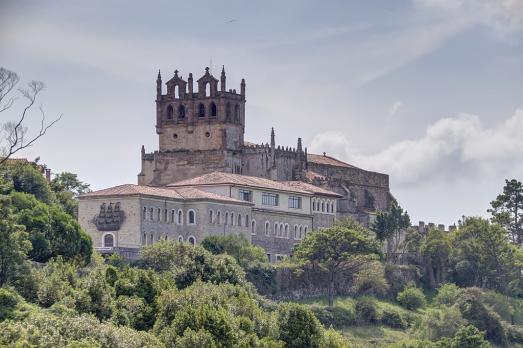
San Vicente de la Barquera, ES

The Church of Nuestra Señora de los Ángeles is a 13th century religious building overlooking the fishing village of San Vicente de la Barquera. Since the Middle Ages, this church has been an important enclave on the Pilgrim's Way to Santiago de Compostela.

Church of Our Lady of the Angels

Church of Our Lady of the Angels

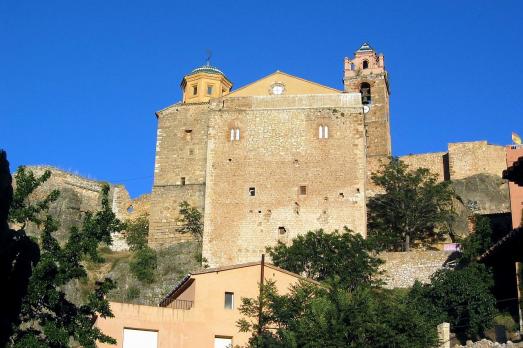
Castielfabib, ES

The earlest part of the church dates back to the end of the mid- 13th century in a typical mix of Gothic and Romanesque styles. After the earthquake of 1656, the chruch was greatly modified in the restoration. Now it is located on a steep slope overlooking the Ebrón river.

Church of Our Lady of the Angels

Church of Our Lady of the Angels

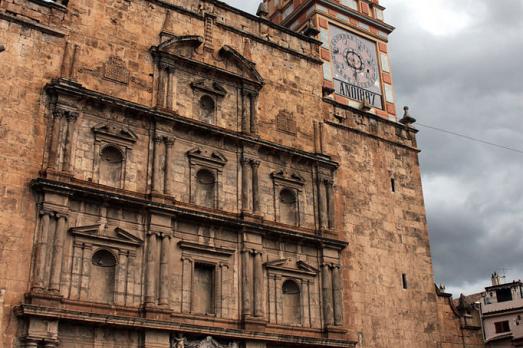
Chelva, ES

This church has a Latin cross plan with side chapels and a transept of equal depth. It was inspired by the Roman Gesù church by Jacopo Vignola. It has the first baroque bell tower and the largest cupola of the moment in the region. The mannerist façade has nothing to do with the lavish decoration of the interior. It looks like an altarpiece frame, which is made up of four level and three bays. The openings are separated by superimposed semi-columns. The styles are. from bottom to top, Doric, Ionic, Corinthian and the composite. As the facade rises, the violation of the classical canon increases: the columns reduce their height without reducing the distance between them. This, together with the continuity of the cornices, makes the proportions become horizontal and flat.

Church of Our Lady of the Angels

Church of Our Lady of the Angels

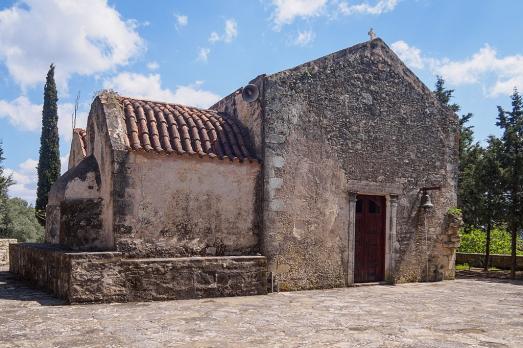
Mires, GR

The church of Our Lady of the Angels is located in the abandoned village of Fradio, between Moroni and Roufas. It was the catholicon of a Franciscan Monastery.

Church of Our Lady of the Angels

Church of Our Lady of the Angels

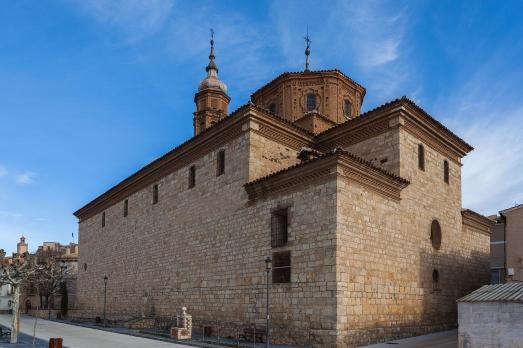
Burbáguena, ES

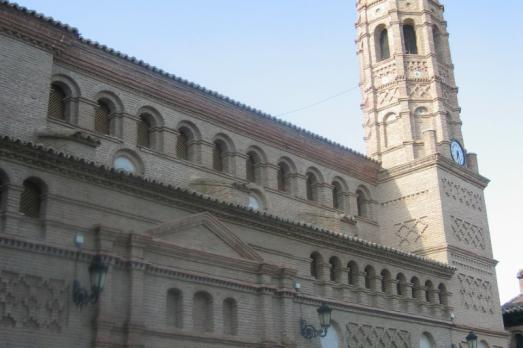
The 18th century baroque church, also known as the Church of the Assumption in Burbáguena (Province of Teruel, Spain), is a baroque building that forms a prominent and compact volume within the town. It is built in ashlar combined with brick in the upper parts (eaves, dome and tower).

Church of our Lady of the Angels (Paniza)

Church of our Lady of the Angels (Paniza)

Paniza, ES

The church of Our Lady of the Angels in Paniza (province of Zaragoza, Spain) is a Mudejar church from the second half of the 16th century with a single nave, side chapels between the buttresses and a polygonal apse in elevation, which in the 17th century suffered a change of orientation, with the consequent construction of a new presbytery. In addition, the interior was redecorated with traditional Mudejar plasterwork and a new façade was opened.

Church of Our Lady of the Angels

Church of Our Lady of the Angels

Llívia, ES

The church of Our Lady of the Angels dates back to the 16th century and was built on top of an old church from the 13th century. The church was completely completed in 1617. It has a single nave with a polygonal apse, side chapels and a bell tower attached to it. The Renaissance façade is decorated with columns, niches and a pediment, with a circular tower on both sides.

Be inspired

Stupkalnis.lt

10 Buddhist stupas to discover in Europe

Stupas are symbols of enlightenment and peace that commemorate different stages of Buddha's life. Since the mid-20th century, thousands of stupas have begun to populate Europe. We have compiled some of the most impressive ones in this list.